Choose your viewer type
Set your role once and we will tailor the guidance across SIP University.
A days-to-shell build
SIPs were built for fast, confident enclosure. Conventional timber frame can spend that same window just on framing and insulation, while SIPs arrive as pre-insulated structural panels that assemble quickly, seal tight, and keep heat where it belongs in the UK climate.
This lesson sets the baseline so you can talk about SIPs with confidence and make sure the rest of the course makes sense.
From timber framing to SIPs
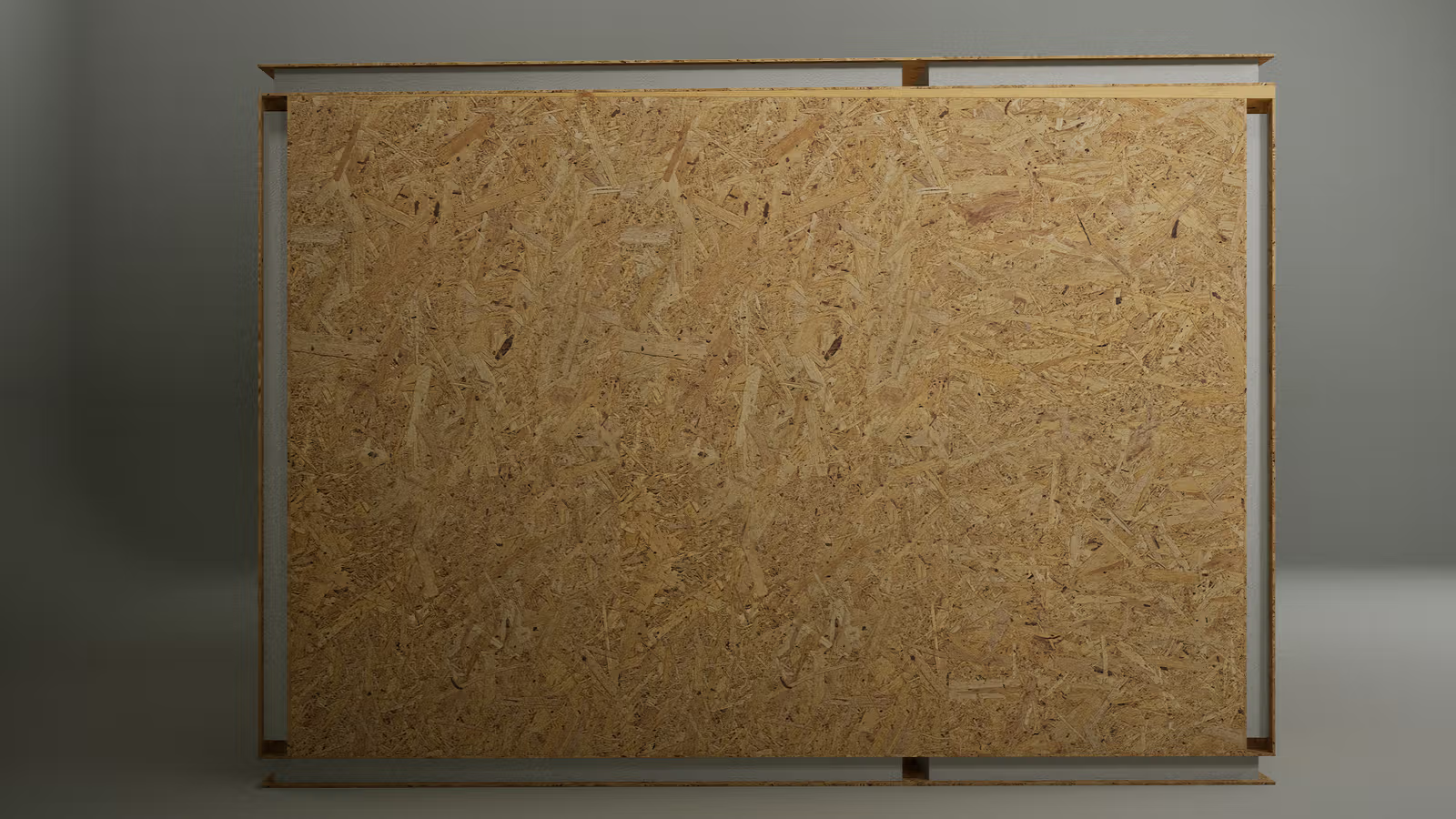
Traditional timber framing is familiar, but it fights physics. Studs interrupt insulation, joints leak air, and thermal bridges drag down performance. SIPs replace the repetitive stud lattice with continuous insulation and a structural skin, so you get speed without sacrificing strength.
What a SIP actually is
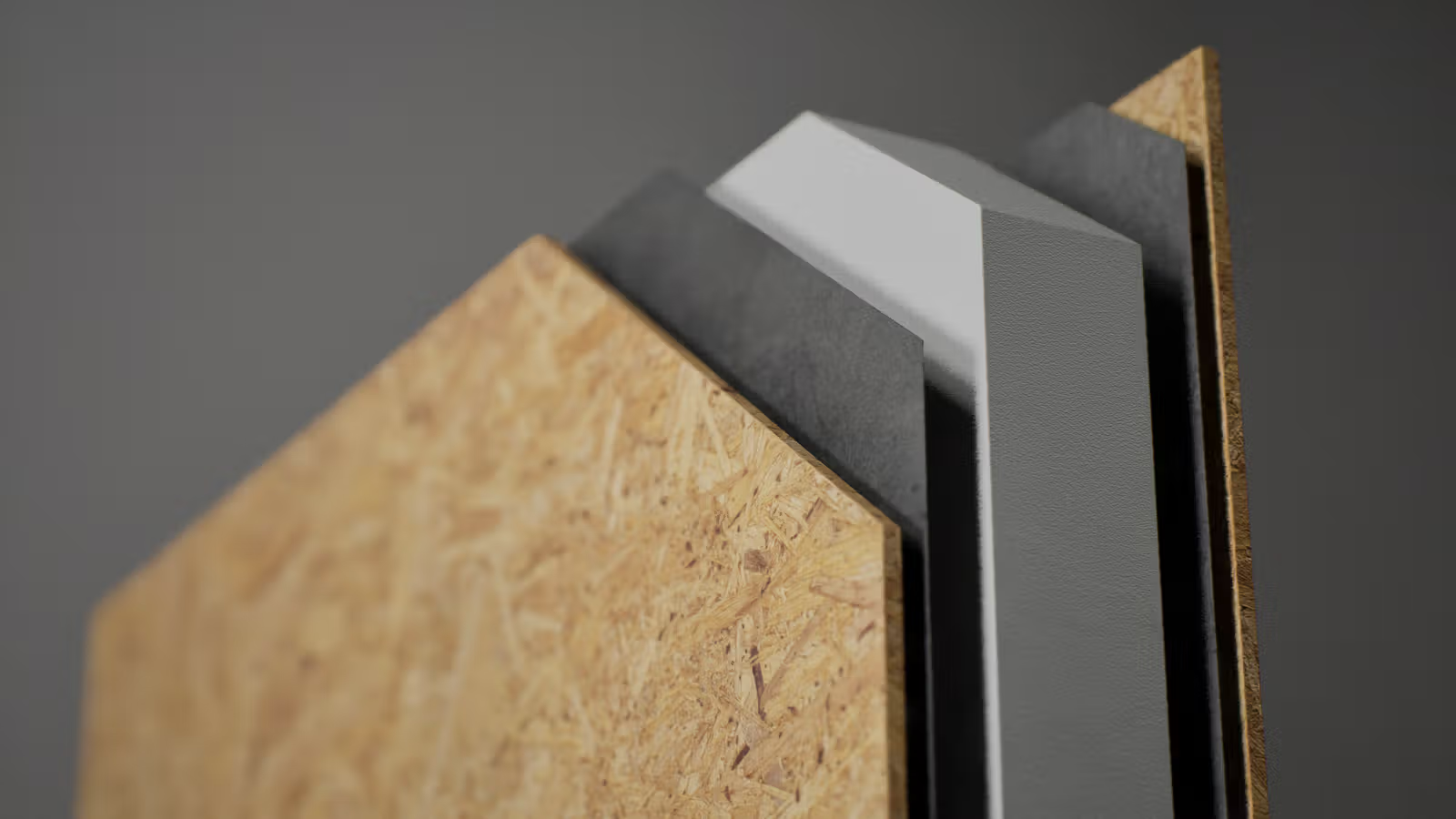
A Structural Insulated Panel is a sandwich that carries load. Two structural facings (usually OSB) are bonded to an insulating core (EPS, PIR, or PU). The glue bond makes the assembly behave as a single structural element.
Key parts to know:
- Skins (OSB): take tension and compression like an I-beam flange, and provide racking resistance.
- Core (EPS, PIR, or PU): handles shear and keeps the skins aligned.
- Bond line: the hidden hero that makes the composite action possible.
Why SIPs became mainstream
SIPs were developed in the 1930s, but they grew as building codes demanded more energy performance. In the UK, tighter Part L targets and airtightness testing pushed designers toward continuous insulation and fewer joints.
The green revolution effect
Energy efficiency, airtightness testing, and carbon reduction targets pushed builders toward systems that could be both structural and insulating. SIPs became a practical way to meet lower U-values without building excessively thick walls.
UK guidance to watch
UK guidance and testing bodies publish updates on structural timber and panel systems. Monitor changes in best practice, fire testing, and evolving system details.
Where SIPs are used
- Floors: long clear spans with fewer joists.
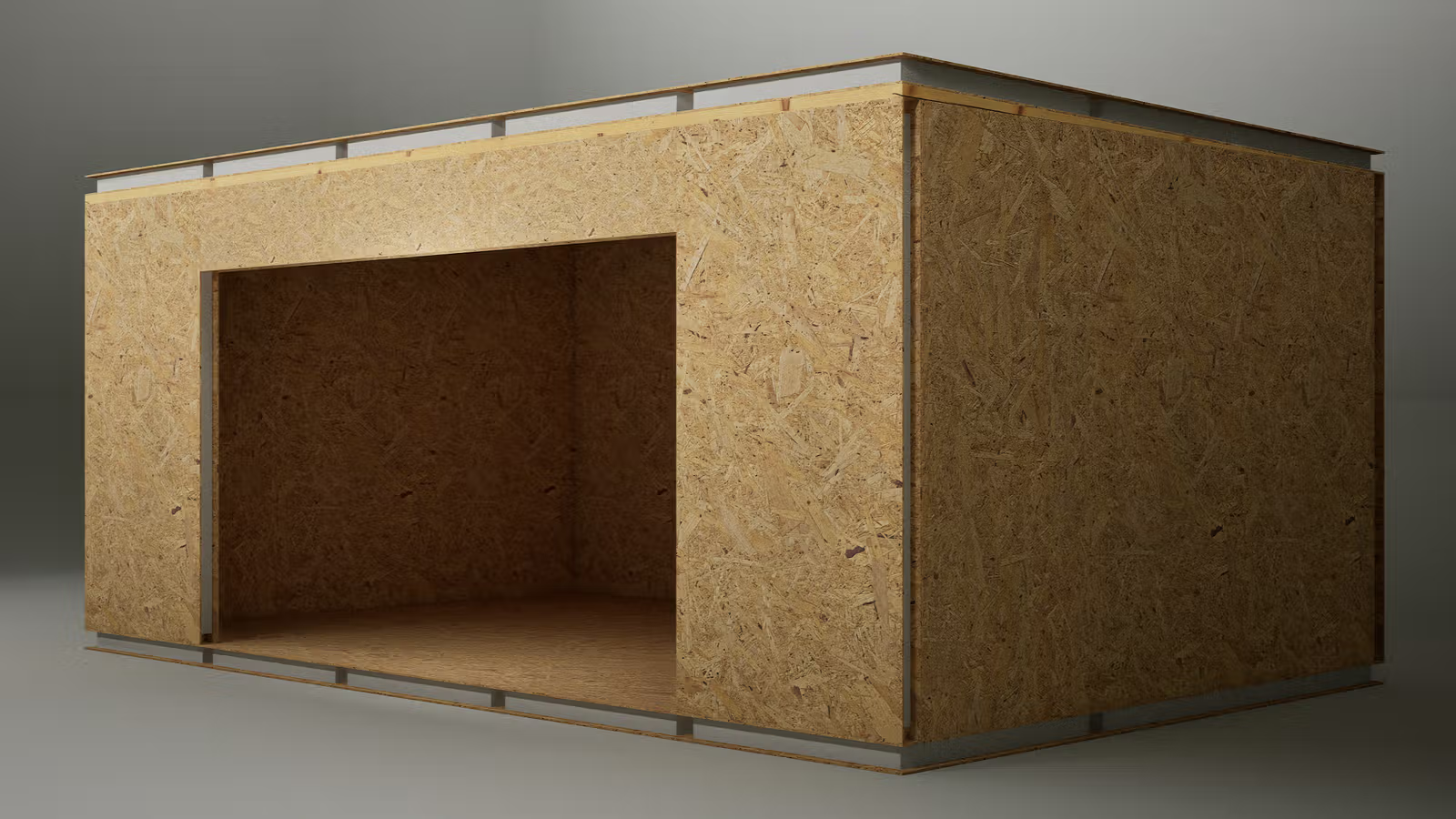
- Walls: simple, fast shell erection with minimal thermal bridging.
- Roofs: vaulted interiors without trusses.
Inside the factory
The manufacturing sequence matters because it dictates quality:
- Sheets are cut to size and prepped.
- Core insulation is cut or injected.
- Adhesive is applied to the skins.
- The stack is pressed under controlled pressure.
- Panels are trimmed, labeled, and packed.
Batch injection vs cut core
Some manufacturers batch inject foam into a mould between skins, while others cut core boards and bond them. The end goal is the same: a uniform bond line and consistent density. Ask how panels are made so you understand tolerances and lead times.
Core materials in plain English
- EPS: cost effective, stable, easy to source.
- PIR: high insulation performance with better fire characteristics; widely used in the UK.
- PU: high insulation per thickness, often used in specialist panels.
- XPS: occasionally used, but less common in SIP manufacturing. UltraSIPS commonly supplies EPS and PIR options in the UK, with specification guidance based on the project brief.
Performance snapshot
SIPs deliver structural strength and thermal performance in one move. Their continuous insulation gives excellent U-values, while the composite action handles high loads with less material.
Compressive strength and bilateral loading
Think of SIPs as a composite beam. The skins resist compression and tension, while the core keeps everything aligned. Panels must be detailed for loads from both directions (wind suction and pressure), so skin selection, fasteners, and splines matter.
Available sizes and thicknesses
Sizes vary by manufacturer, but a common rhythm in the UK is 1200mm or 1220mm wide panels with lengths cut to suit the design. Thickness is chosen by structure and U-value targets. Typical ranges are 90mm to 250mm depending on walls, roofs, and floors. Always confirm spans and thicknesses with manufacturer tables.
Skin materials: OSB, metal, and cementitious
SIP skins define how panels handle weather exposure, fire, and site work. OSB is the dominant skin, but metal and cementitious skins are used where different performance priorities matter.
Fire performance comparison
Fire behavior is about the whole assembly, not just the core. Skins behave differently under heat.
Woodworm and insect resistance
Pests are attracted to exposed timber and cellulose, so skin choice and edge detailing matter in pest-prone climates. In the UK this is generally a low-risk consideration: woodworm is typically associated with untreated, exposed timber rather than resin-bonded OSB in a sealed SIP. It matters more for export work and warmer climates, but either way keep panels dry and edges protected until the building is weathertight.
Panel size constraints
Panel size impacts joints, crane planning, and transport. Skin choice influences maximum size.
Weight and handling
Weight changes labor, equipment, and install speed.
Field modifications
Cutting and adjustment depends on the tools and dust control on site.
Finish material reality check
Skins are structural. You still need a durable exterior finish.
Common myths to clear up
- "SIPs are just foam with wood stuck on." They are engineered composites.
- "They are weak in fire." Fire resistance depends on the tested assembly, lining, and detailing.
- "You cannot modify them on site." You can, but you need to plan penetrations.
Lesson checklist
- Know the three SIP layers and how they share load.
- Understand why continuous insulation changes energy performance.
- Learn where SIPs are best used: floors, walls, and roofs.